
17 July 2026
By Rob — bench hand joiner, time served
Can Timber Windows Be Repaired?
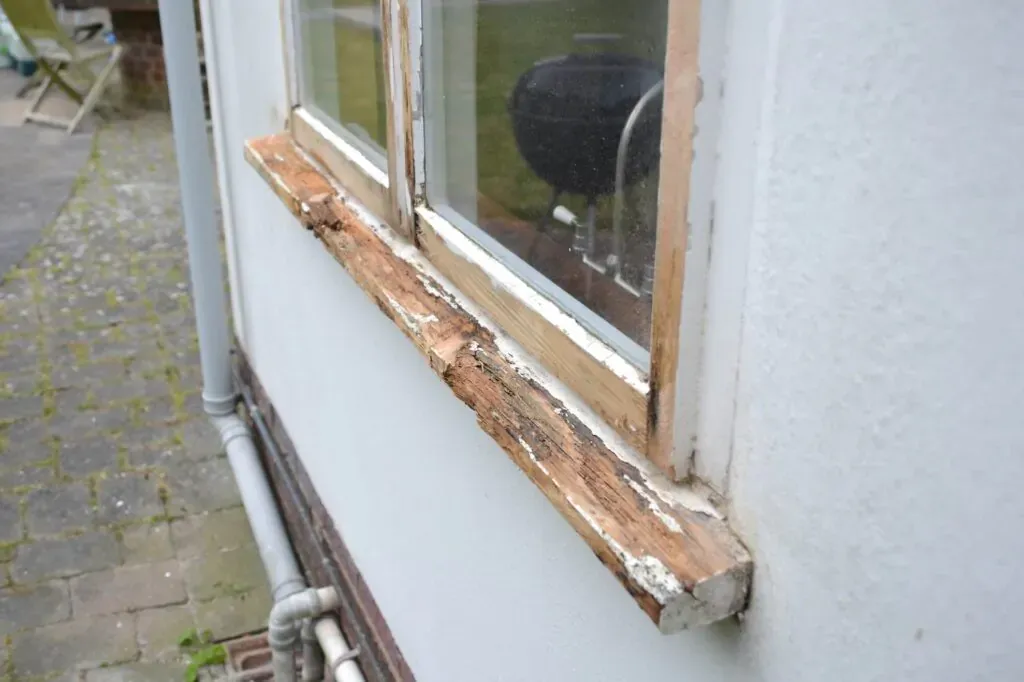
Timber windows get condemned far too quickly. A bit of soft wood at the bottom of a sash, some flaking paint and a draught, and the assumption is that the whole window needs ripping out. Often it doesn’t. Where the decay is localised and most of the original frame and sash are still sound, a timber window repair is usually possible — and on an older property that’s frequently the better answer, not just the cheaper one.
Can Rotten Timber Windows Usually Be Repaired?
The honest answer is usually yes, but it depends where the rot is and how much sound timber is left around it. Localised decay — a soft rail end, a tired section of sill — is a different proposition to a window that has failed all over.
A window has to be judged as one thing. The frame, sill, sashes and joints work together, so it’s the condition of the whole unit that decides the route, not one soft spot on its own. It’s also worth being realistic about what you can see: the visible damage often understates the extent, because timber can be soft behind paint that still looks intact. Photographs give a useful first view, but they don’t replace opening the area up and testing the timber properly. That repair-first approach is the same one behind our timber window repairs — keep what’s sound, replace only what has genuinely failed.
Which Parts of a Timber Window Commonly Rot
Rot doesn’t appear at random. It goes where water sits and can’t dry out, and on most timber windows that’s the same handful of places: the external sill — or cill, in the joiner’s spelling — which takes the weather head-on; the bottom rails of the sashes; the lower sections of the frame; the ends of the glazing bars; and the joints, particularly the bottom corners, where end grain meets end grain and moisture gets trapped.
It also follows failure. Where paint has cracked and let water in, where putty has come away from the glass, and — very often — where a previous filler repair has been smeared over soft timber and simply sealed the damp in behind it. Those quick cosmetic fixes are one of the most common reasons a window that could have been repaired properly ends up worse than it started.
What a Proper Timber Window Repair Involves
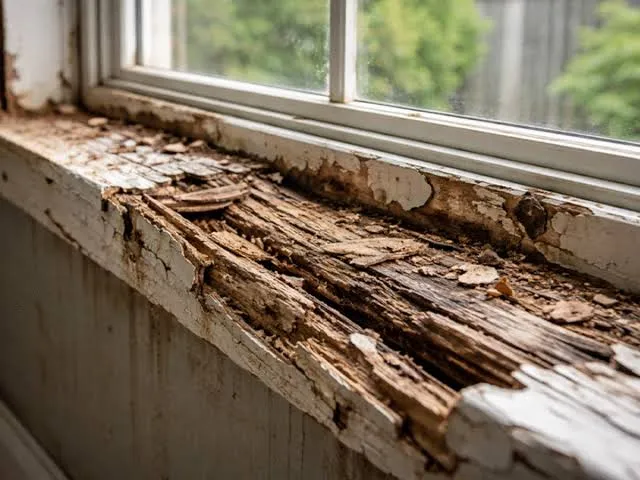
A proper timber window repair is not filling over rotten wood. Filler on soft timber hides the problem for a season and comes back worse, because the moisture and decay are still sitting behind it.
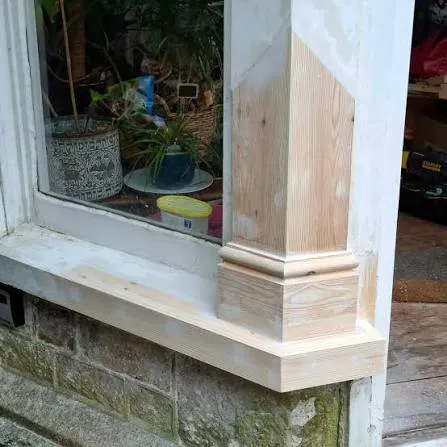
The real process is closer to this. Inspect the affected area and find how far the decay actually runs. Cut the decayed timber back to clean, sound wood — usually a little further than looks necessary, because any soft timber left in will just carry on rotting around the repair. Form an accurate repair, letting in a new piece of matching timber where a section has to be replaced. Match the timber section and the visible profile, so the repair reads as part of the window rather than a patch stuck on. Secure and finish it properly, and prepare the timber for priming, painting or whatever protection the window is having.
None of that is a job to encourage anyone to take on with a tube of filler and hope — it’s the timber rot removal and splice repair side of the work, where cutting back to viable timber and matching the section is what makes the repair last.
Timber Splice or Resin Repair?
There’s no single right method — it depends on the damage. A timber splice suits a defined section that can be cleanly removed and replaced: a rail end, a length of sill, a piece of frame where the surrounding timber and joints are still sound enough to carry the new work.
Resin has its place too, in selected, limited repairs — consolidating an edge, filling a small defect. What it should never be is trowelled over wet, soft or unsound timber to save cutting the rot out. Used that way it just seals the problem in. The right choice comes down to the location, the depth and how structural the damaged area is, and some repairs sensibly use a combination of the two. Neither method is automatically better than the other.
A Real Example: The Window the Customer Thought Needed Replacing
A recent job on a Grade II listed cottage on Carr Bottom Road in Greengates, Bradford. The owner had already decided the window was beyond saving and was expecting to replace it.
It wasn’t. The decay was confined to the bottom rail of the opening casement. The stiles, the top rail and the original leaded glazing were all sound. The rot was cut back to firm timber, new timber was let in along the rail to match the existing profile, and the casement went back on its hinges and back into use. The glazing never came out of it.
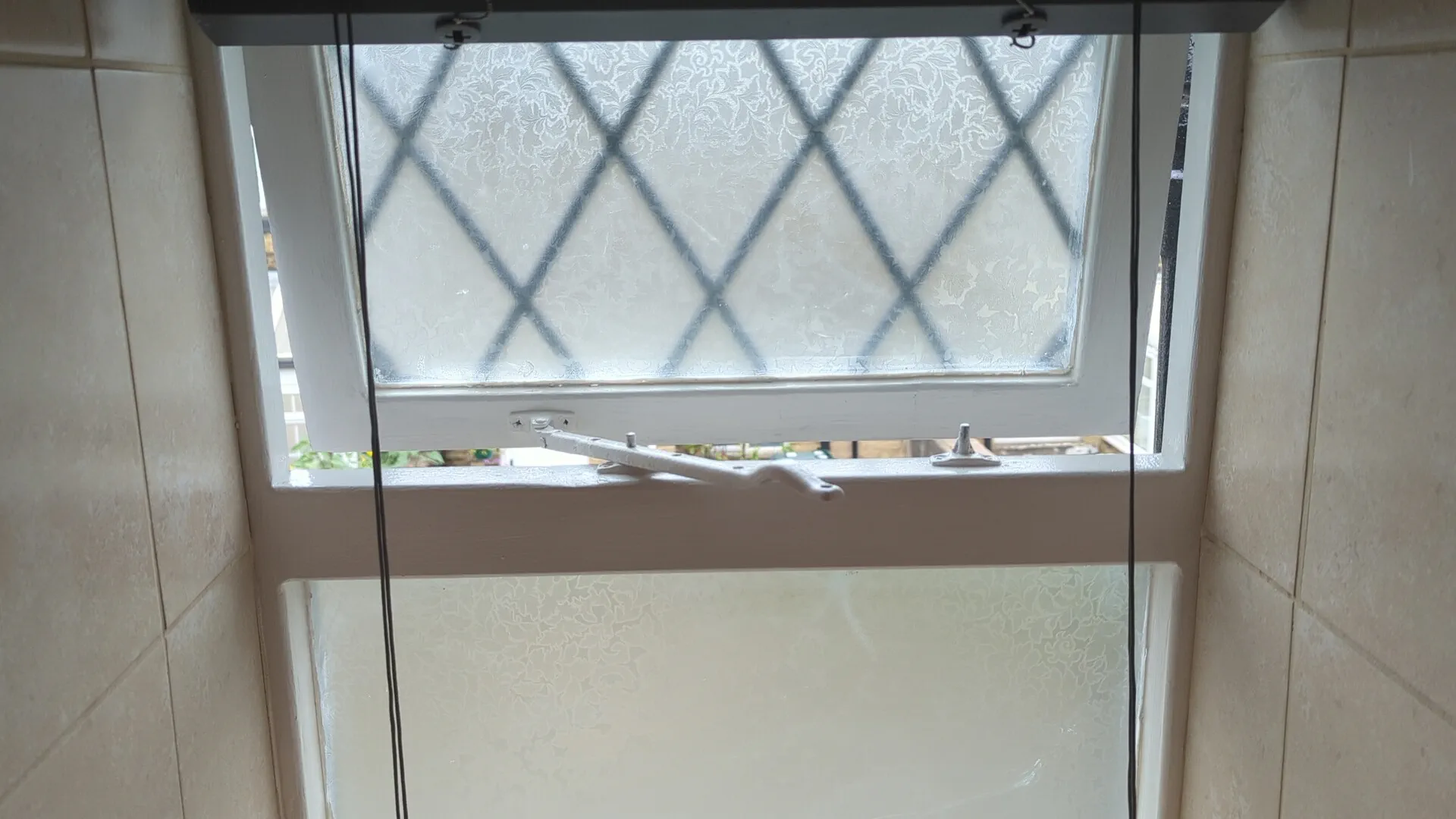
That is the point of asking the question before reaching for a quote. The answer here was a rail, not a window. The full job, including what needed consent and what did not, is written up in listed casement window repair in Bradford. More on how we approach casement and sash window repair, and on repair or replace as a decision.
When a Timber Window Should Be Replaced
Replacement should be a reasoned decision, not the automatic response to one soft corner. It becomes the sensible route when decay has got through several of the main structural members, when the frame or sash is badly distorted, when the joints have failed across the whole unit, or when there’s simply not enough sound timber left to carry a reliable repair. Repeated poor-quality repairs can push it that way too — at some point another patch is throwing good money after bad.
Cost comes into it honestly: once the repair becomes disproportionate to replacing the unit properly, replacement is the better value. And sometimes it isn’t only the window — the opening itself, or the surrounding structure, also needs putting right. Working out where a particular window sits on that scale is exactly what our repair-or-replace assessment is for.
Are Old and Heritage Timber Windows Worth Repairing?
On period properties, usually yes. Original windows carry things a standard replacement struggles to reproduce: the proportions, the depth of the mouldings and glazing bars, sometimes original glass with its slight ripple, and the way a run of windows matches across a frontage. Recreate that with an off-the-shelf product and the building loses character, even where the new units are perfectly sound. That’s a large part of the case for a repair-first approach on older buildings.
Matching new timber to what’s already there is central to that kind of work. Heritage Joiners contributed specialist joinery work to the restoration of The Counting House in Pontefract — a project later recognised with the Heritage Award at Pontefract Civic Society’s 2025 Design Awards — where retaining and matching existing timber detail mattered throughout.
On listed buildings and in conservation areas, repairing the original windows is often preferred to replacing them, and there may be consent requirements attached. That isn’t legal advice: if your property is listed or protected, check what’s needed before changing any historic windows.
What Affects Timber Window Repair Cost?
There’s no single figure for timber window repair, because it depends on a genuine list of variables: how many windows are involved, access to them, how far the decay has spread and where it sits, whether it’s a sliding sash or a fixed frame, how complex the mouldings are to match, how much timber matching is needed, any glazing or putty work, the ironmongery, whether draught-proofing is wanted, and the finishing and decoration at the end. Whether the window can be repaired in place or needs taking out for workshop repair makes a difference too.
The practical way to get a sensible first view is to send clear photographs — the whole window, and close-ups of the damaged areas — rather than trying to describe it. That’s usually enough to say whether repair looks viable before anyone needs to visit.
Timber Window Repairs in Pontefract and Across Yorkshire
Heritage Joiners takes on timber window repair and restoration across Pontefract, Wakefield and the surrounding parts of West Yorkshire, including Castleford, Featherstone, Knottingley and Normanton, out towards Leeds, and on selected heritage jobs across wider Yorkshire. That covers assessing whether a window is repairable, splicing out and matching decayed sections, sill and rail repairs, easing and draught-proofing, and sympathetic replacement where a window is genuinely past saving.
If you’ve got a window you’re not sure about, send a few photographs of the whole window and any damaged areas, along with where the property is and which windows are affected. Rob can usually give an honest first view on whether it’s repair, restoration or replacement you’re looking at — or get in touch directly.