
16 September 2026
By Rob — bench hand joiner, time served
Listed Casement Window Repair in Bradford
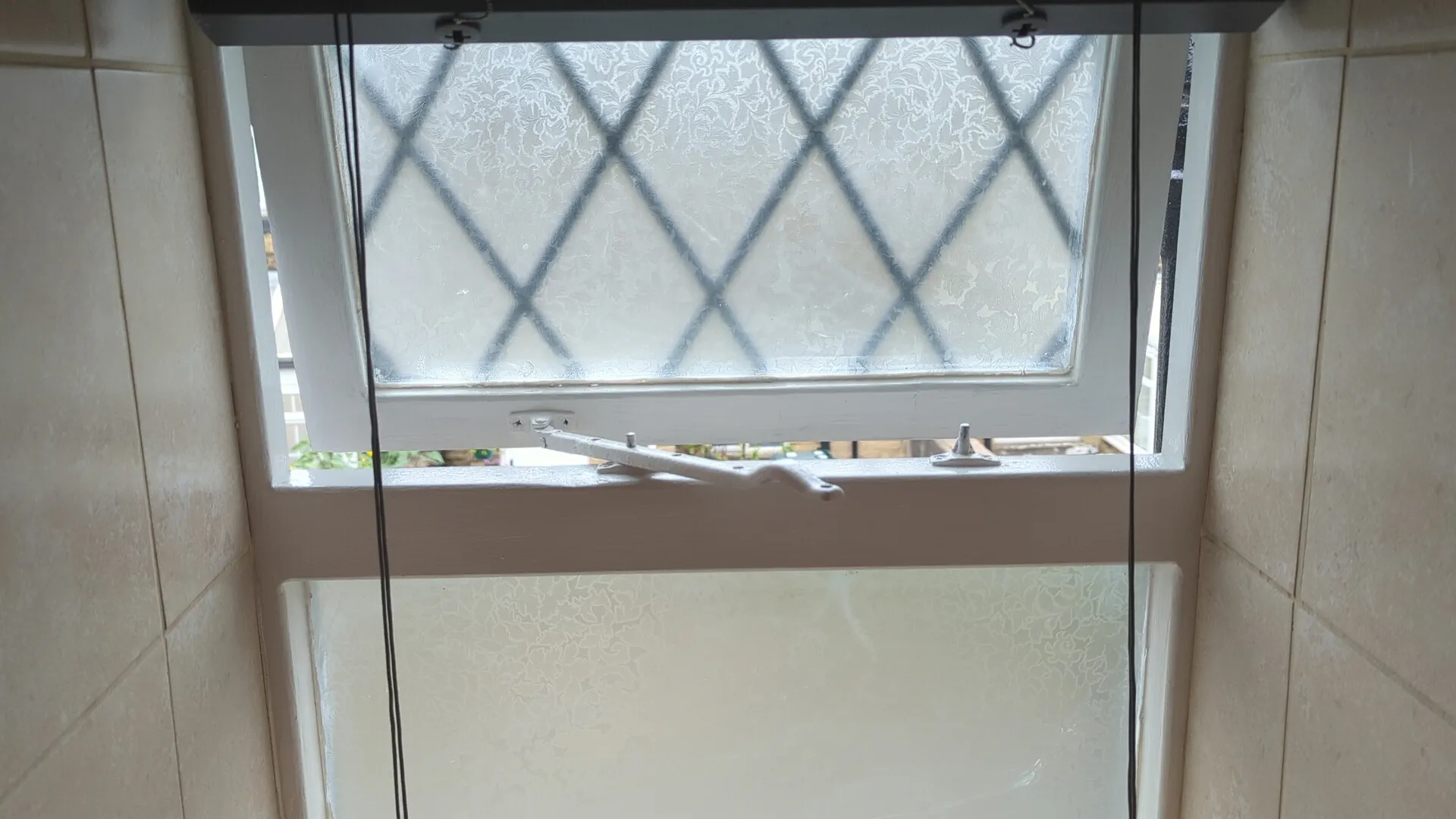
The owner of this cottage had already made their mind up before we arrived. The window was rotten, it had been rotten a while, and it needed replacing. They were expecting a price for a new one.
It did not need replacing. The decay was in the bottom rail of the opening casement and nowhere else. Everything above it — the stiles, the top rail, the leaded glazing — was sound. So the rail got repaired, the window stayed in the building, and on a Grade II listed cottage that is not just the cheaper answer, it is the correct one.
A Grade II listed cottage on Carr Bottom Road
The building is one of a row of cottages on Carr Bottom Road in Greengates, Bradford, listed Grade II. Historic England describes the row as:
“A row of sandstone cottages with quoins, and a stone slate roof with prominent kneelers on the gable ends. There are two storeys and each cottage has one bay. The doorways have squared jambs, most of the windows have been replaced by casements, and two cottages have retained two-light mullioned windows.”
Mid to late eighteenth century, in other words, and still recognisably what it was built as.
Worth being straight about one thing: the listing itself records that most of the windows in the row have been replaced with casements over the years. So this is not an original eighteenth-century window and we are not going to pretend it is. It is a casement in a listed building, which is a different thing — and it still matters, because the listing covers the building as a whole, not just the parts that happen to be original.
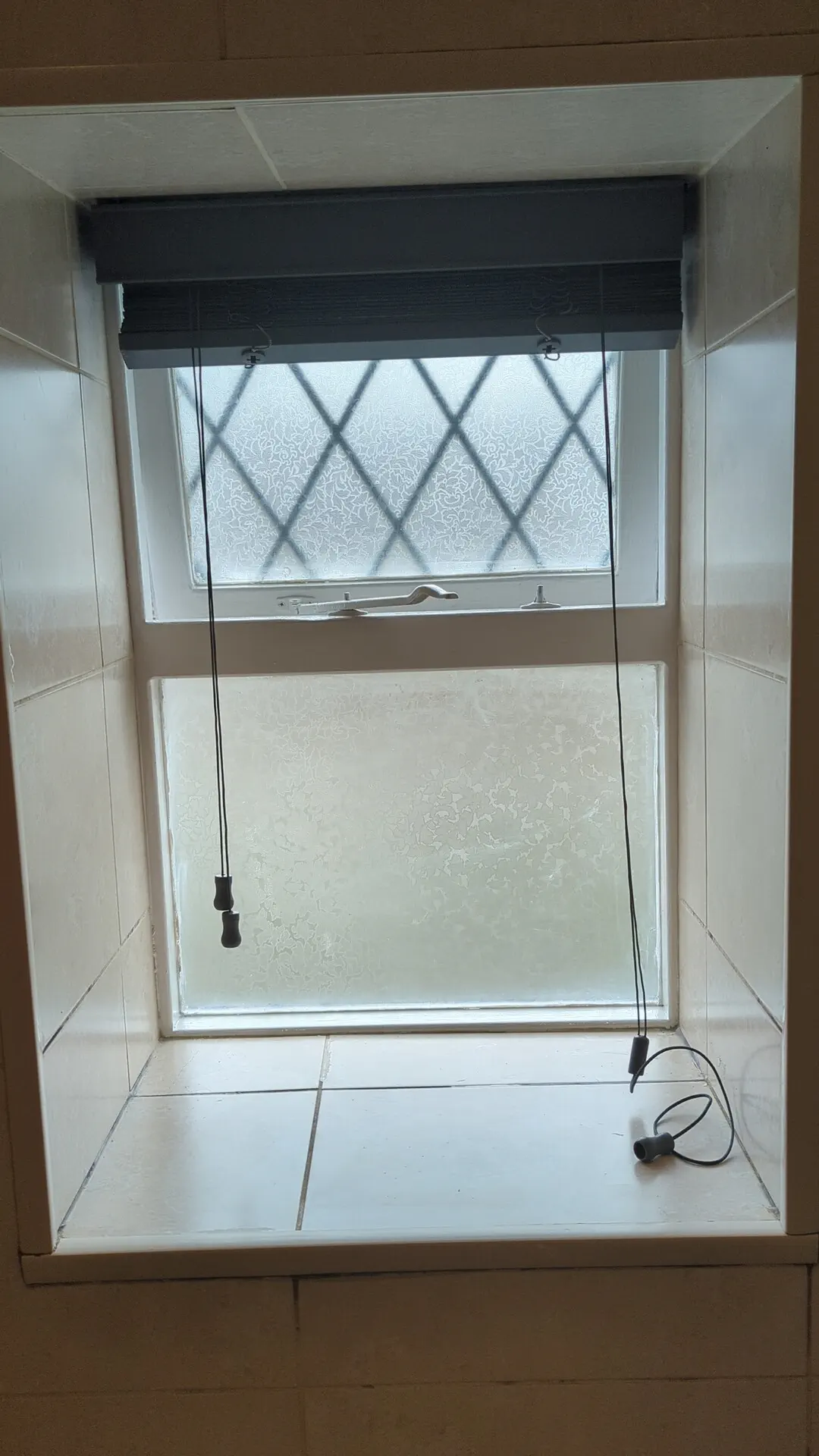
What was actually wrong: the bottom rail
Casement windows nearly all fail in the same place, and for the same reason.
The bottom rail is the horizontal timber along the bottom of the opening casement, running between the two upright stiles. Rain runs down the glass and collects along it. It is the one part of the window that spends its life with water sitting on it.
So the paint film breaks somewhere along that rail — often somewhere you would not notice, a hairline split, a nail hole, the join at the corner — water gets behind it, and the timber underneath starts to go. From outside the window can look tired but intact. Press the rail with a screwdriver and it goes straight in.
That is what had happened here. Soft along the rail, sound everywhere else.
Cutting the rot back to sound timber
The casement came off its hinges and went flat so it could be worked on properly.
The first job on any timber repair is finding where the sound wood starts. Decayed timber has no strength and will not hold anything, so there is no point stopping while it is still soft — you cut back until a chisel is biting into firm timber and not before.
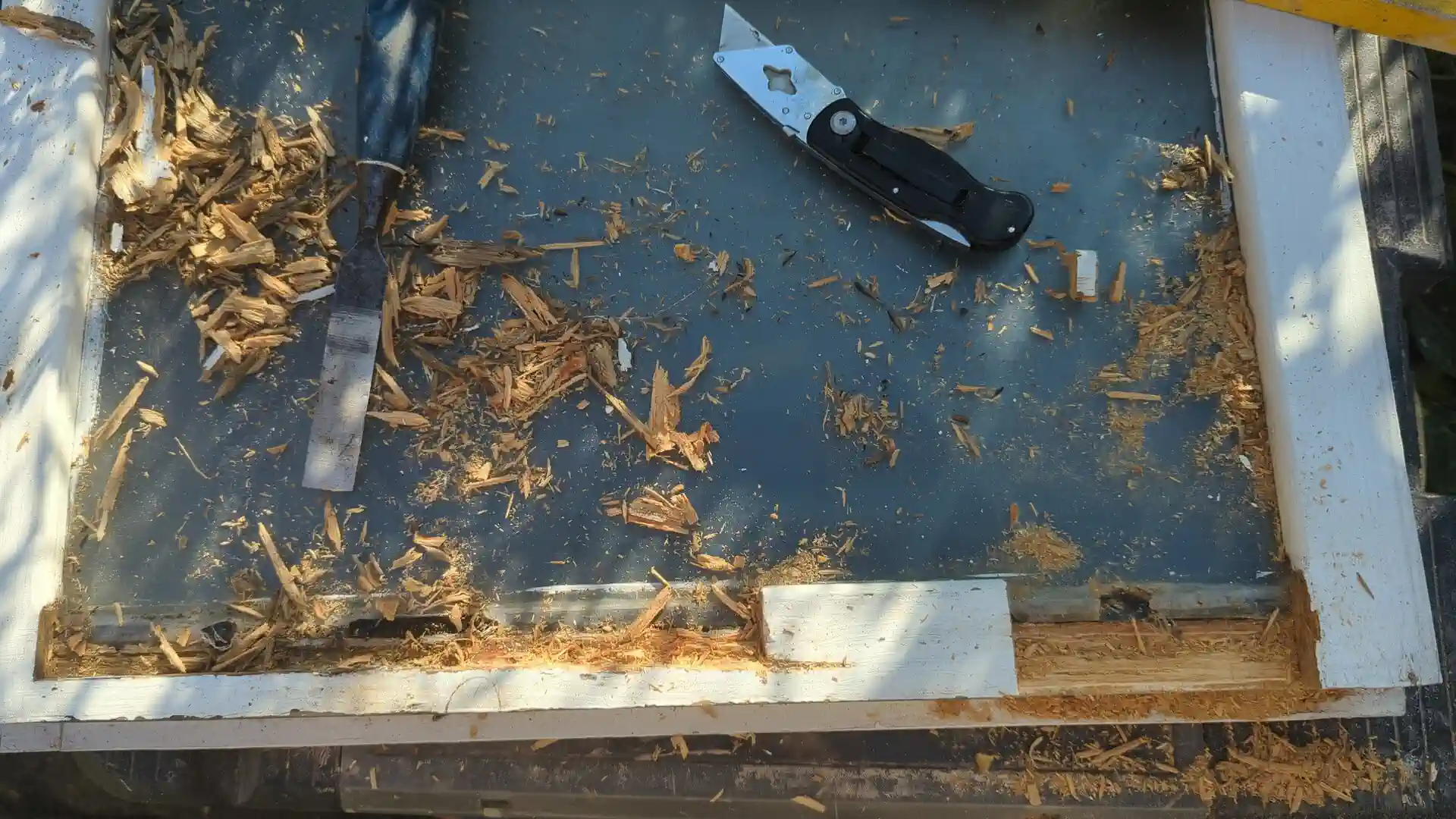
The quantity of material that comes out tells you what you were dealing with. This was not a case for filler. Filler needs sound timber to key into, and it carries nothing — put it into decayed wood and you have hidden a problem rather than repaired one, and it will push back out within a season or two.
Letting new timber into the rail
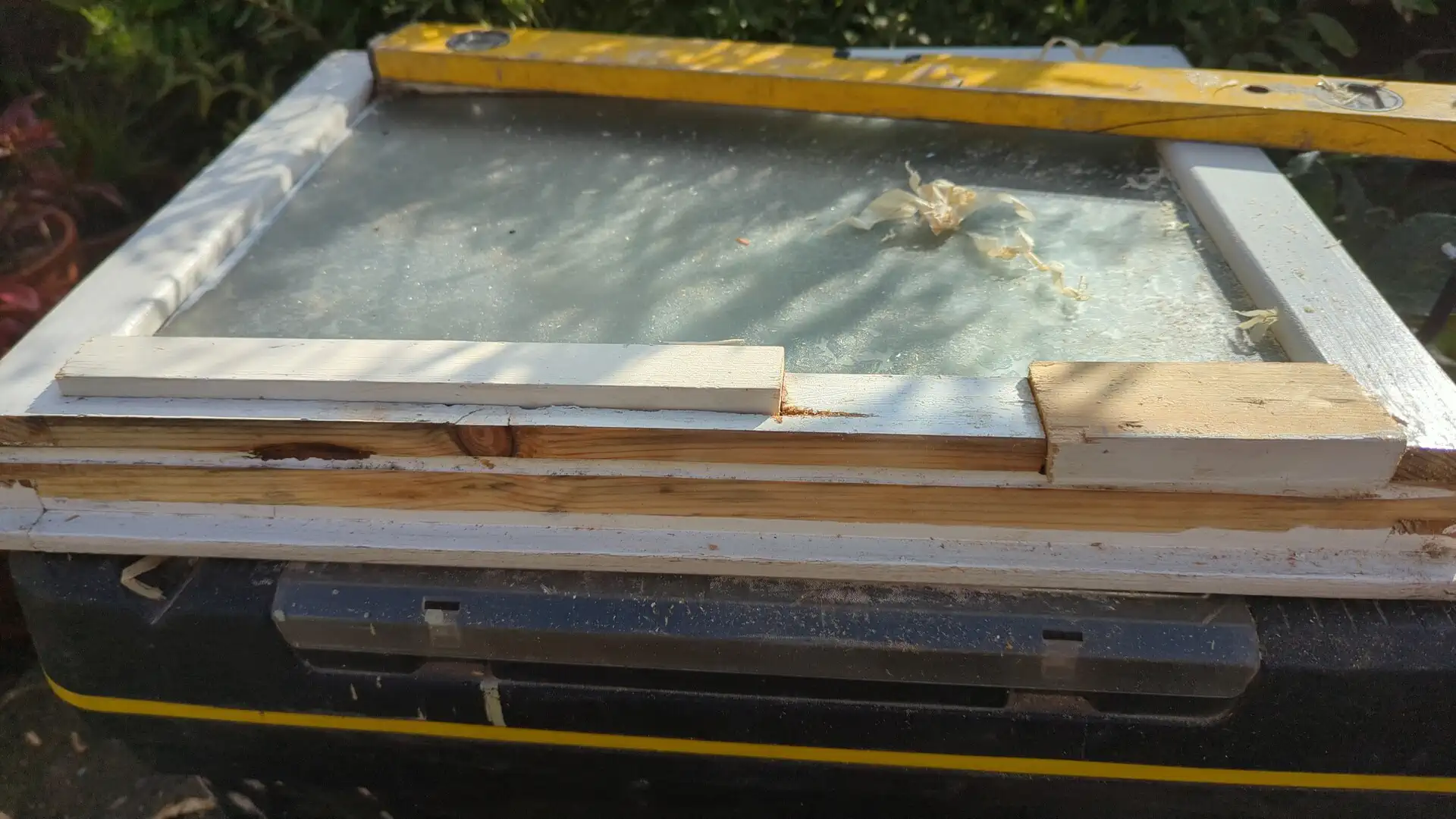
With the rot out, what is left is a clean opening in the rail with firm timber either side of it. New timber gets cut to fit that opening, and let in.
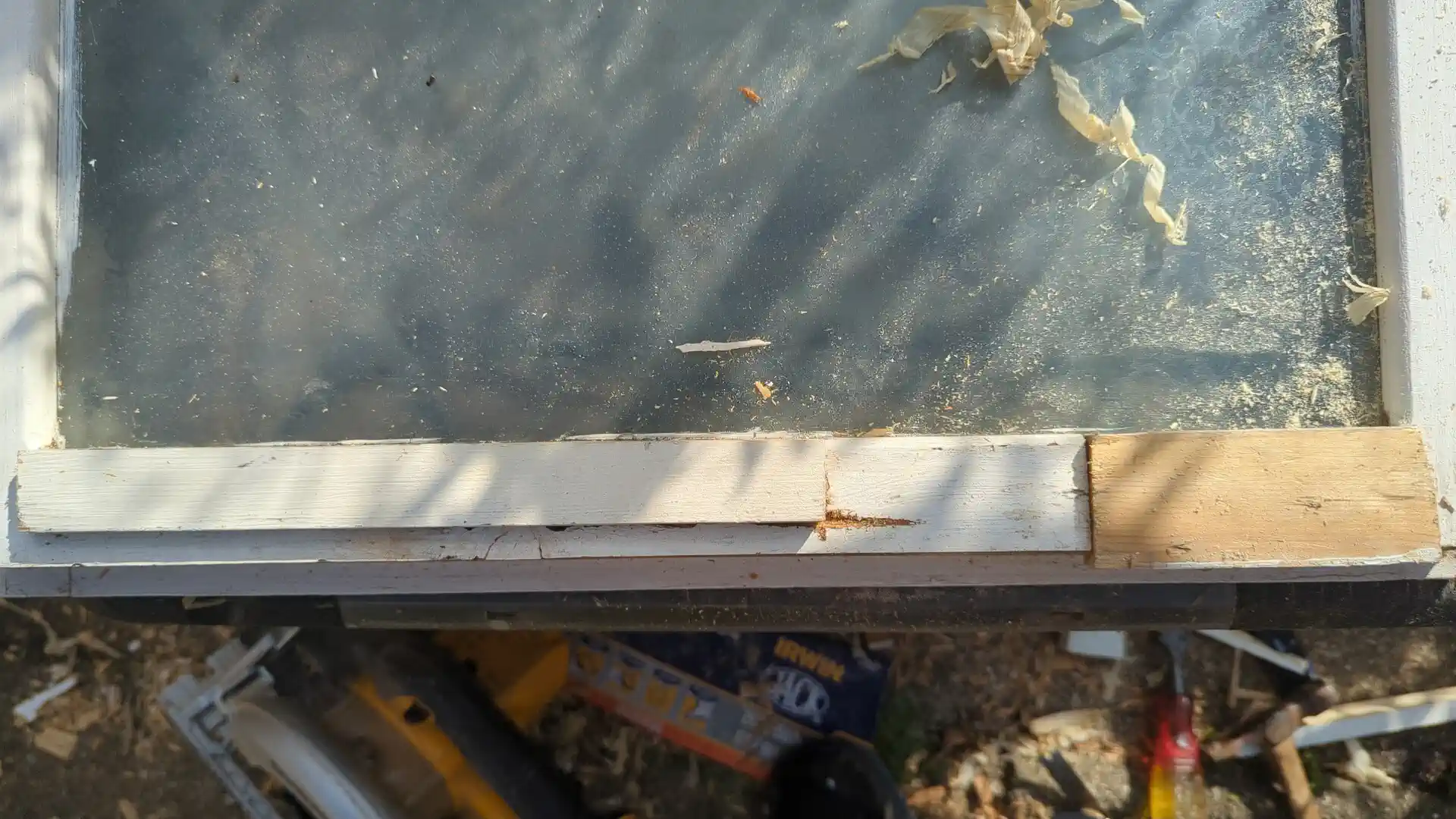
The points that matter on a repair like this:
- It is cut, not filled. A let-in repair is a joint between two pieces of timber, with proper bearing, doing the same job the original did.
- The profile carries through. The rail has a shape — the bottom edge, the rebate the glass sits in, the angle that sheds water. New timber has to follow all of it or the repair reads as a patch from ten feet away.
- The grain runs the same way, so old and new move together instead of opening up at the joint the first time the weather changes.
- The glass stays in. The decay was below the glazing line, so there was no reason to take it out. Old glass is easily broken and not easily matched.
Does a listed building window repair need consent?
This is the part people get wrong in both directions — some assume nothing can be touched, others assume the listing does not really apply to them.
The legal test sits in section 7 of the Planning (Listed Buildings and Conservation Areas) Act 1990. Consent is required for works of alteration that “would affect its character as a building of special architectural or historic interest”. That is the whole question: does the work change the building’s special interest?
A like-for-like repair — same timber, same profile, putting back exactly what was there — does not normally change that character. It is repair, not alteration.
Replacement is treated differently. Bradford Council’s guidance is explicit:
“The replacement of a door or window will always require Listed Building Consent, as this would be classed as an alteration rather than repair.”
And the council’s stated approach to listed buildings generally is “repair rather than replace the original fabric of the building” and “keep original features such as doors and windows”.
So on this job: repairing the bottom rail in matching timber, to the same profile, with the window staying in its opening, is repair. Replacing the casement would have been an alteration and would have needed consent first.
One caution, and it is a real one. The statutory test involves judgement, and what affects a building’s character varies from one building to the next. Do not take a blog post as clearance for your own job. If there is any doubt at all about what you are proposing, ask the conservation team at the council before anything starts — Bradford’s are contactable and would far rather answer a question early than deal with unauthorised work later.
Back on its hinges
Once the repair was cut in, the casement went back on its hinges, back on its stay, and straight back into use.
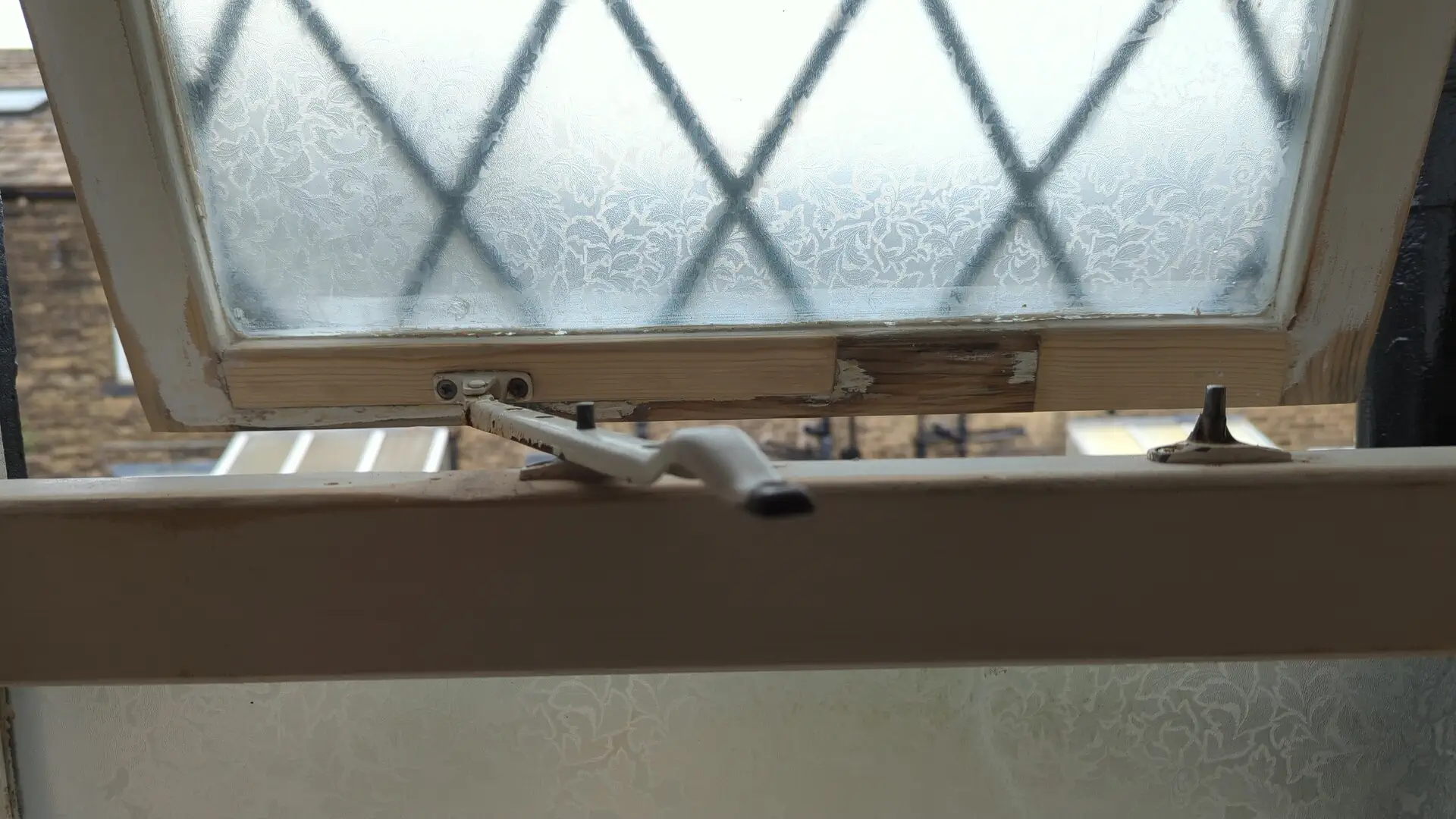
The bare timber in that photograph is the whole repair. Painted, you would walk past it.
Why repair beats replacement on a listed building
Historic England’s position on traditional windows is not ambiguous. Complete replacement “should be a last resort, for example if they are beyond repair”, and “careful repair is preferable to new work as it will retain the historic fabric of your home”.
They also deal with the objection people usually raise:
“There is a widely held view that repairs are short lived and not as good as new replacement windows, but this need not be the case if you use an experienced joiner and the right materials, even for external softwood frames.”
That is the crux of it. A repair is only as good as the person cutting it. Done properly, a let-in repair is not a stopgap — it becomes part of the window and lasts as long as the timber around it.
On this job the owner expected to lose the window and pay for a new one. What they got was a rail. That is the same repair-or-replace judgement behind every job we take on, and it runs through our sash and casement window repair and timber repair and restoration work. If you are weighing it up yourself, can timber windows be repaired? goes through how the decision gets made.
Timber window repairs in Bradford and West Yorkshire
This one was in Greengates, Bradford. Heritage Joiners takes on casement and sash window repair, rotten bottom rail and cill repairs, splice repairs and timber window restoration across Bradford, Leeds, Wakefield, Pontefract and the wider West Yorkshire area, including listed and period properties.
If you have got a window someone has told you needs replacing, send Rob some photos before you agree to anything — the whole window, and a close-up of the rotten area — and he will give you an honest view on whether it is a rail or a window.
Sources: Historic England list entry 1133270 · Historic England — Repair or change windows in an older home · Bradford Council — Do I need listed building consent? · Bradford Council — Altering or repairing a listed building · Planning (Listed Buildings and Conservation Areas) Act 1990, s.7