
21 July 2026
By Rob — bench hand joiner, time served
Flat Roof Repair in Wakefield
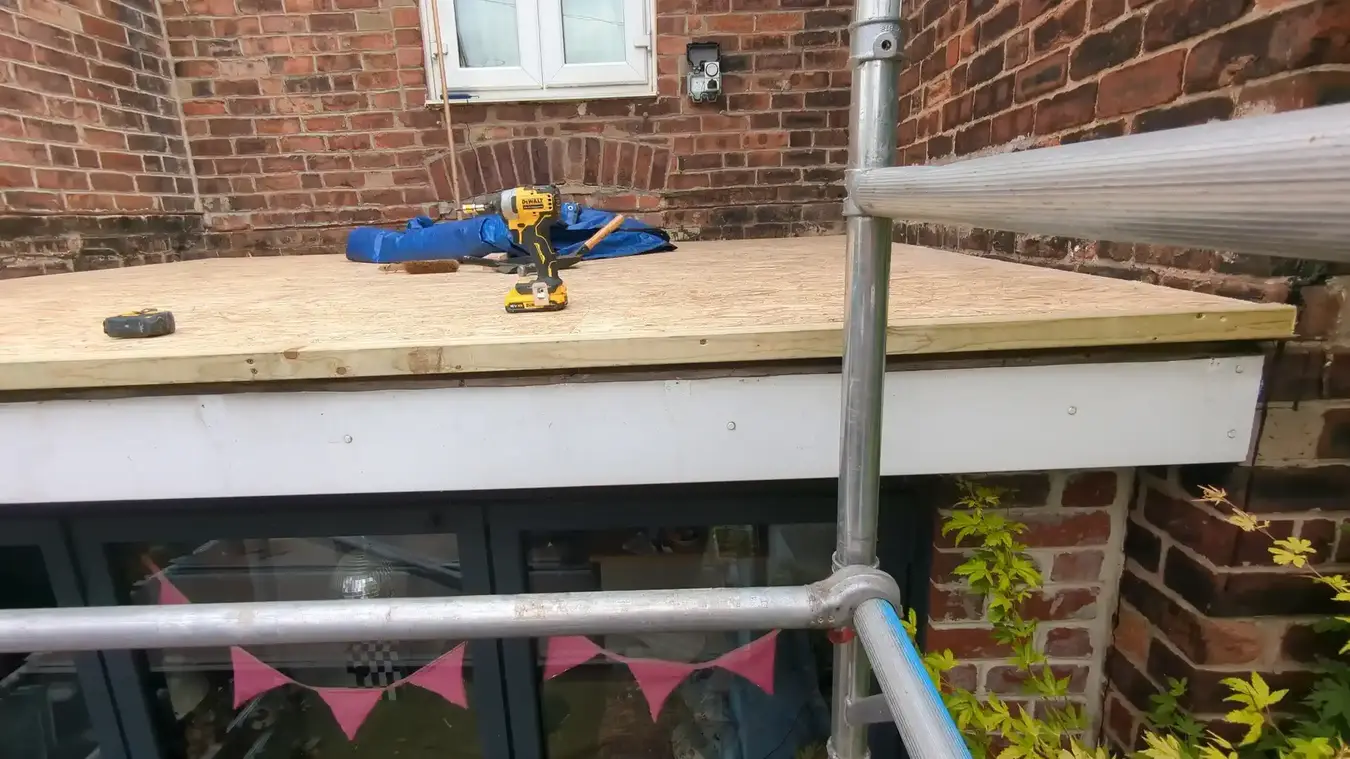
We were called out to a leaking flat roof in Wakefield. From the outside it had a GRP (glass-reinforced plastic, or fibreglass) covering that looked sound enough. It wasn’t. Water had been getting in for a long time, and once we opened the roof up the damage underneath was serious — the deck had rotted through, and the wet rot was starting to get into the roof structure itself.
Here’s the job from strip-out to a sound new deck — and why we didn’t rip every timber out to put it right.
The flat roof we were called out to
The complaint was the usual one with a failing flat roof: water coming through the ceiling below. What you can see from inside is only ever the end of the story. The real problem sits in the deck and the structure, where water has been tracking and sitting, often for years, before it finally shows on the ceiling.
On a roof like this the same timbers do two jobs — they’re the roof joists, carrying the deck on top, and the ceiling joists, with the plasterboard ceiling fixed straight to their underside. So decay in those joists is a threat to both the roof and the ceiling below. By the time water reaches the room, the timber has usually taken a lot of punishment, and left much longer the wet rot would have had a firm hold right through the structure, not just in the deck.
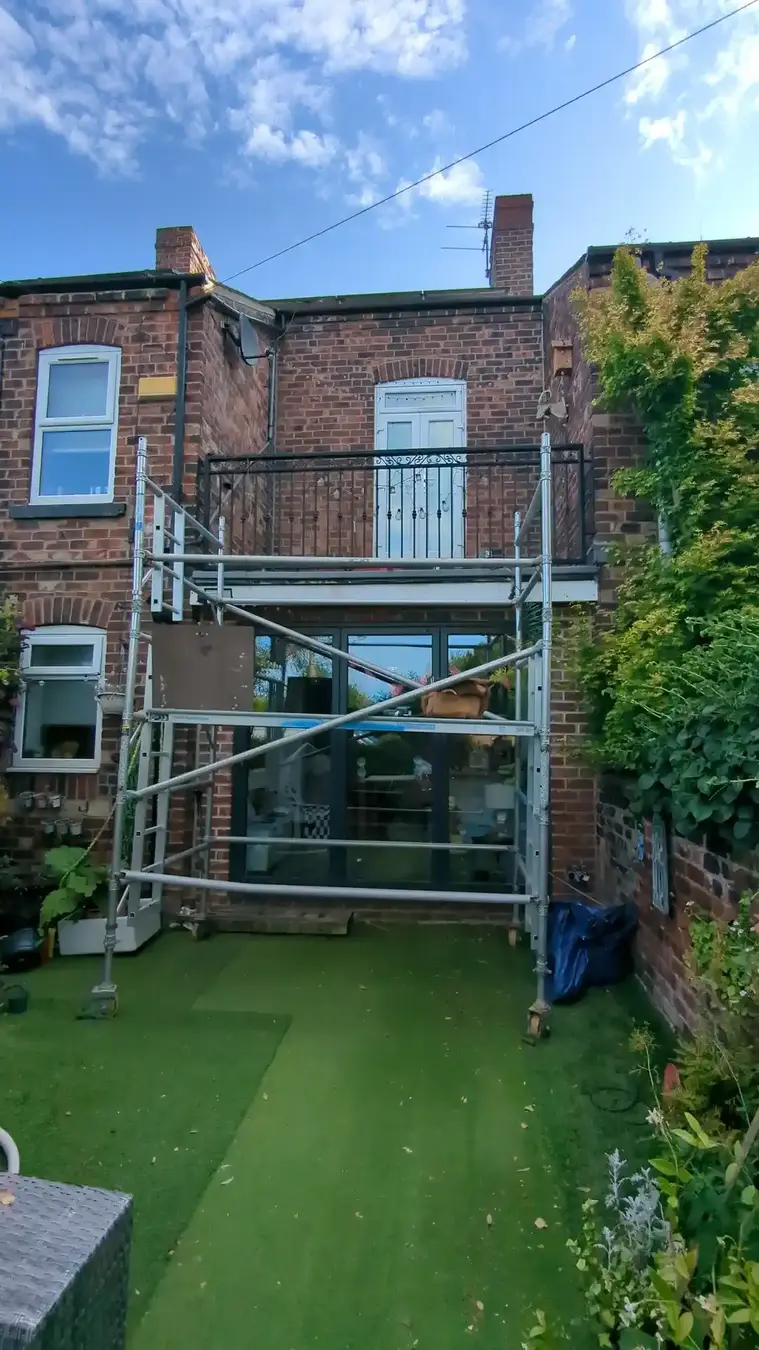
Stripping back a failed roof build-up
We cut the GRP away and started stripping the roof back. What we found was a roof that had been built up in layers over the years.
Originally it had been an 18mm OSB deck over the joists, felted. At some point that felt roof had leaked — and rather than stripping it back and putting it right, someone had simply boarded straight over the top of the old wet felt, re-covered it, and later fibreglassed over that as well. So you ended up with a covering, over a board, over old felt, over the original board — with water sealed inside the sandwich and nowhere to go.
That’s why it kept leaking. Once water is trapped between layers on a flat roof, it never dries out. It just sits there and works its way into the timber.
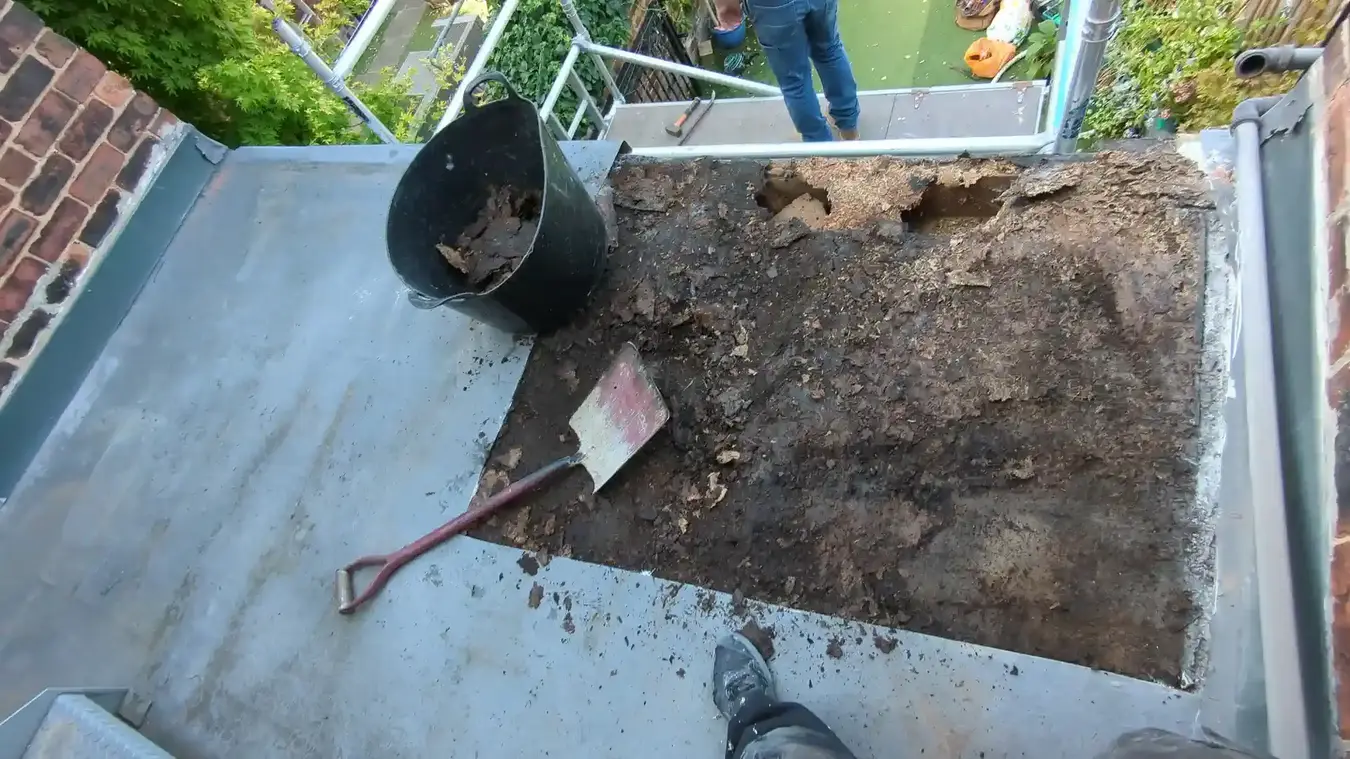
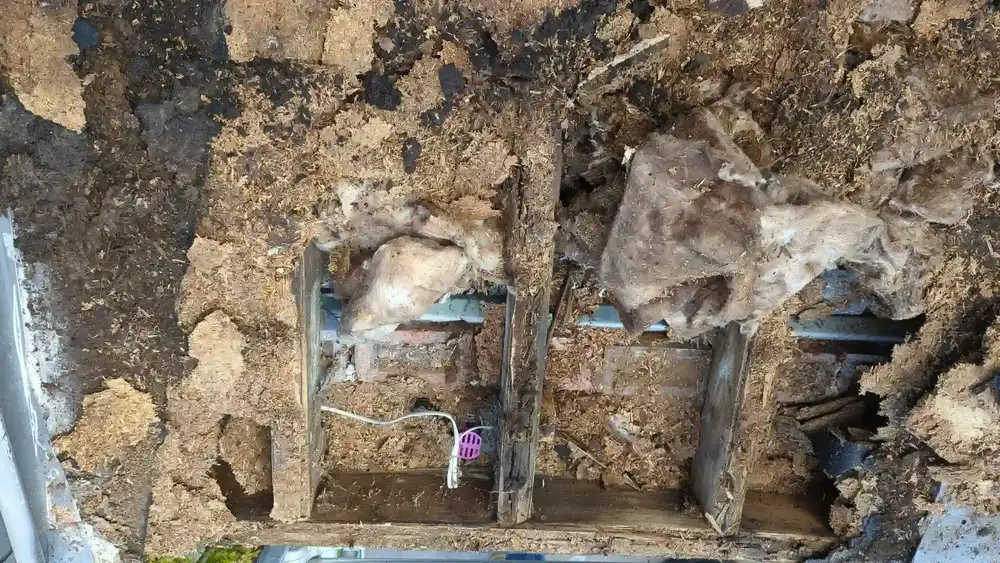
The old OSB deck had been wet for so long it had lost all its strength. It had broken down into a soft, crumbling material — more like damp chippings than a board. We weren’t lifting boards off; we were sweeping the old deck up into the bin. That tells you everything about how long the water had been getting in.
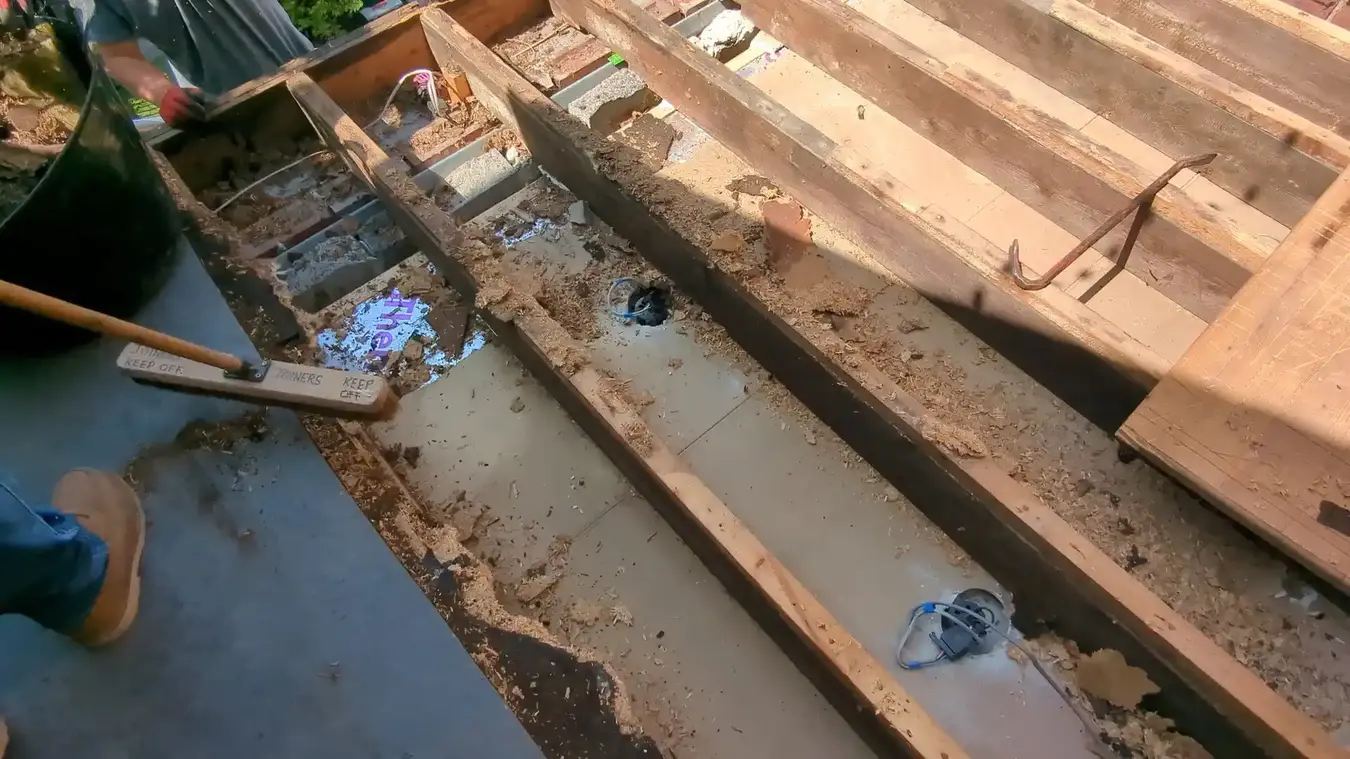
Wet rot in the roof timbers
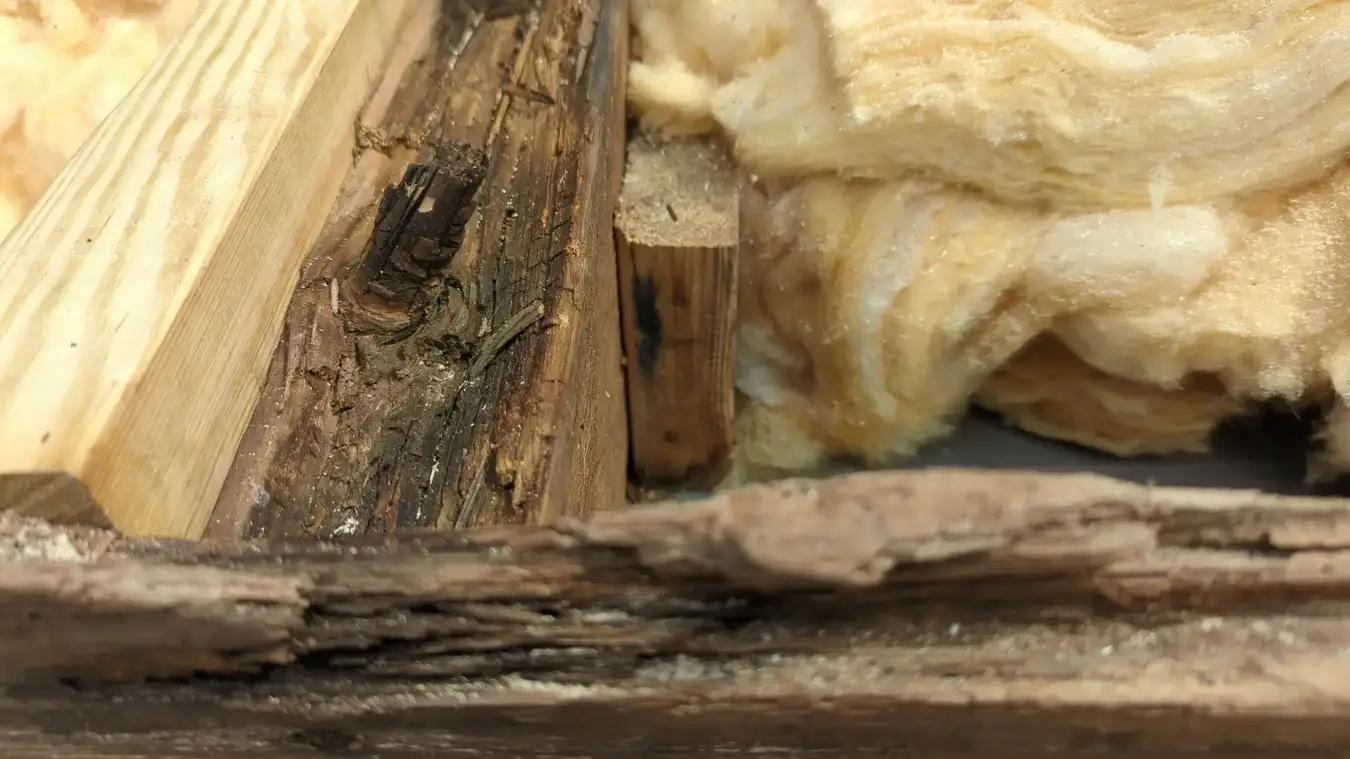
With the deck off, we could properly assess the structure. The good news was that most of the joists were still sound. The decay had got into the timber at one end — roughly the first metre — where the water had been sitting longest. A couple of the firrings (the tapered timbers that give a flat roof its fall) had rotted through as well.
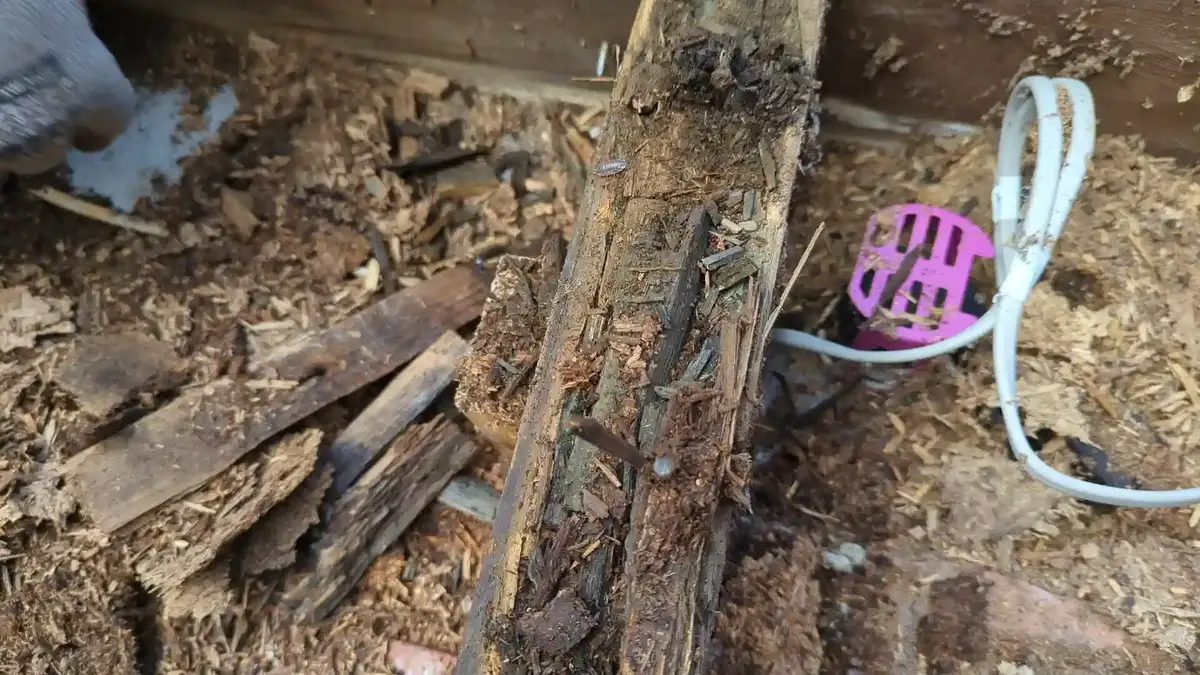
This is the point where flat roof repairs tend to go one of two wrong ways. Either someone boards straight back over the damp, weakened timber — and the whole thing fails again within a couple of years — or they condemn the lot and rip out a perfectly sound roof structure at needless cost and disruption. Neither is right.
Treating the wet rot the right way
The recognised way to deal with wet rot is straightforward in principle, and it’s what guidance from bodies such as Historic England sets out: stop the water getting in, let the timber dry, remove what’s genuinely lost its strength, and treat and keep what’s still sound. Wet-rot fungus can’t keep working once the timber is dry — the water is the real problem, not the wood itself.
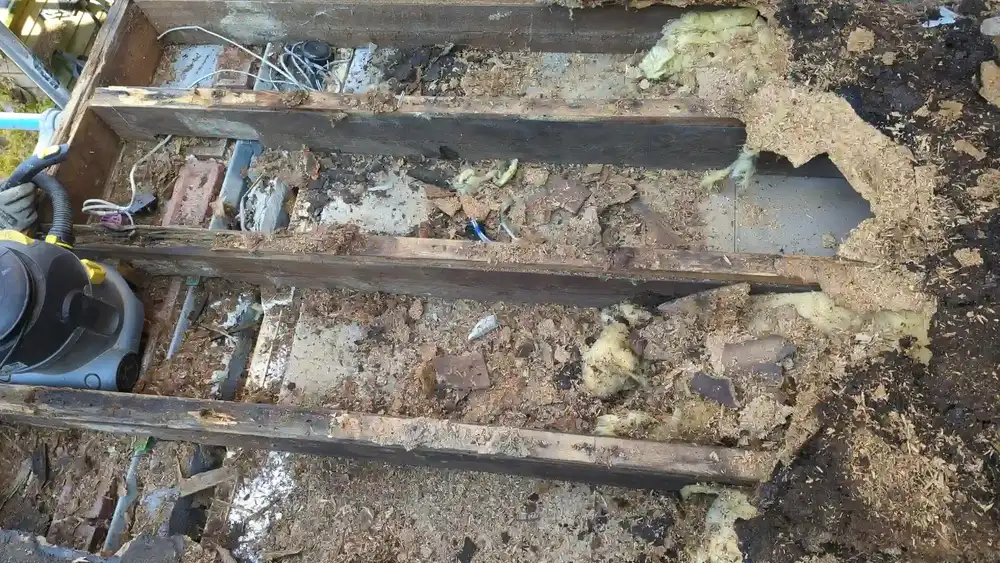
So that’s what we did. The moment the old covering came off, the source of the water was gone. We scraped back all the loose, soft, friable material until we were down to firm timber, then treated the retained timbers with a fungicidal wet-rot preservative.
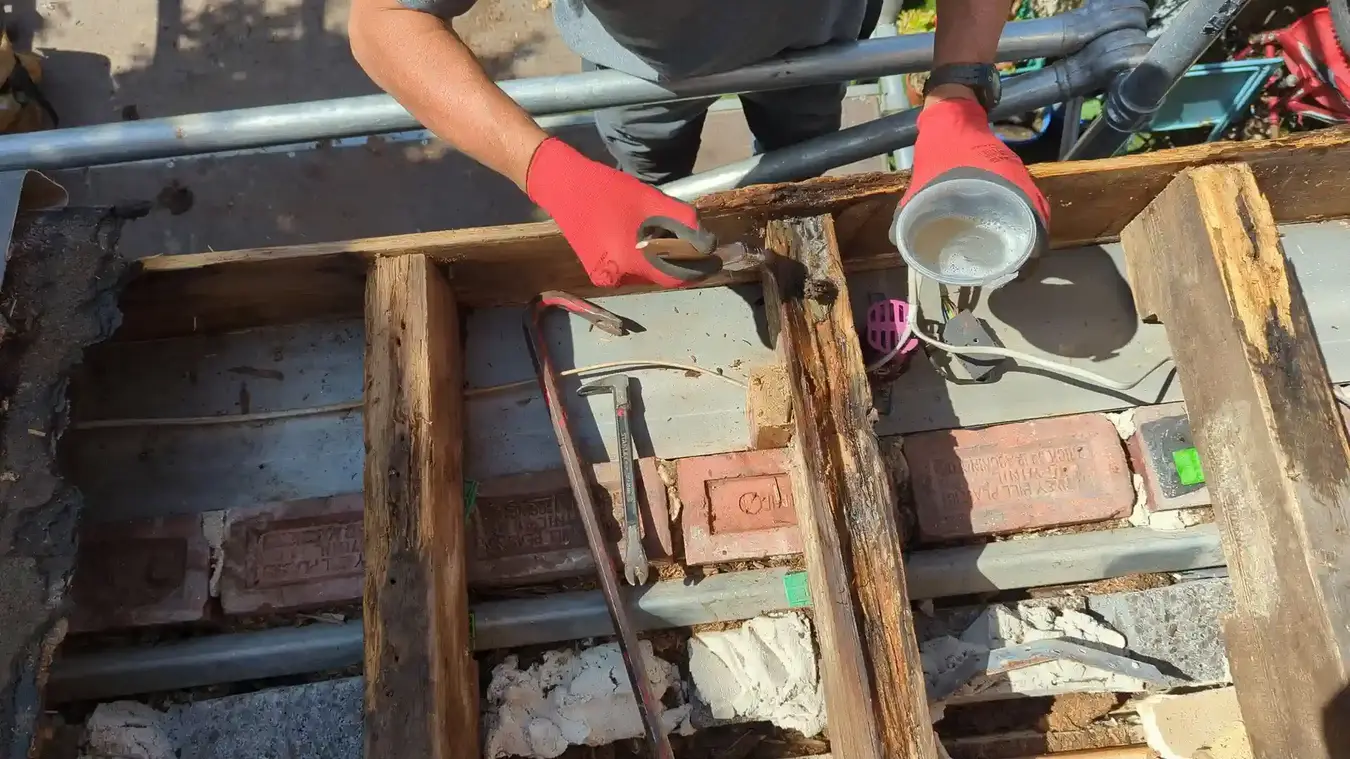
One honest point worth making: preservative does not put strength back into timber that has already decayed. It kills off residual fungal activity and protects the sound timber going forward — but it’s protection, not a structural repair. The strength has to come from somewhere else. That’s the next step.
Strengthening the joists with full-length timbers
Rather than cutting out and splicing short sections, we strengthened the affected joists by fixing full-length 6×2 timbers alongside the existing ones — the full span, bearing properly at both ends, and screwed off at roughly 600mm centres.
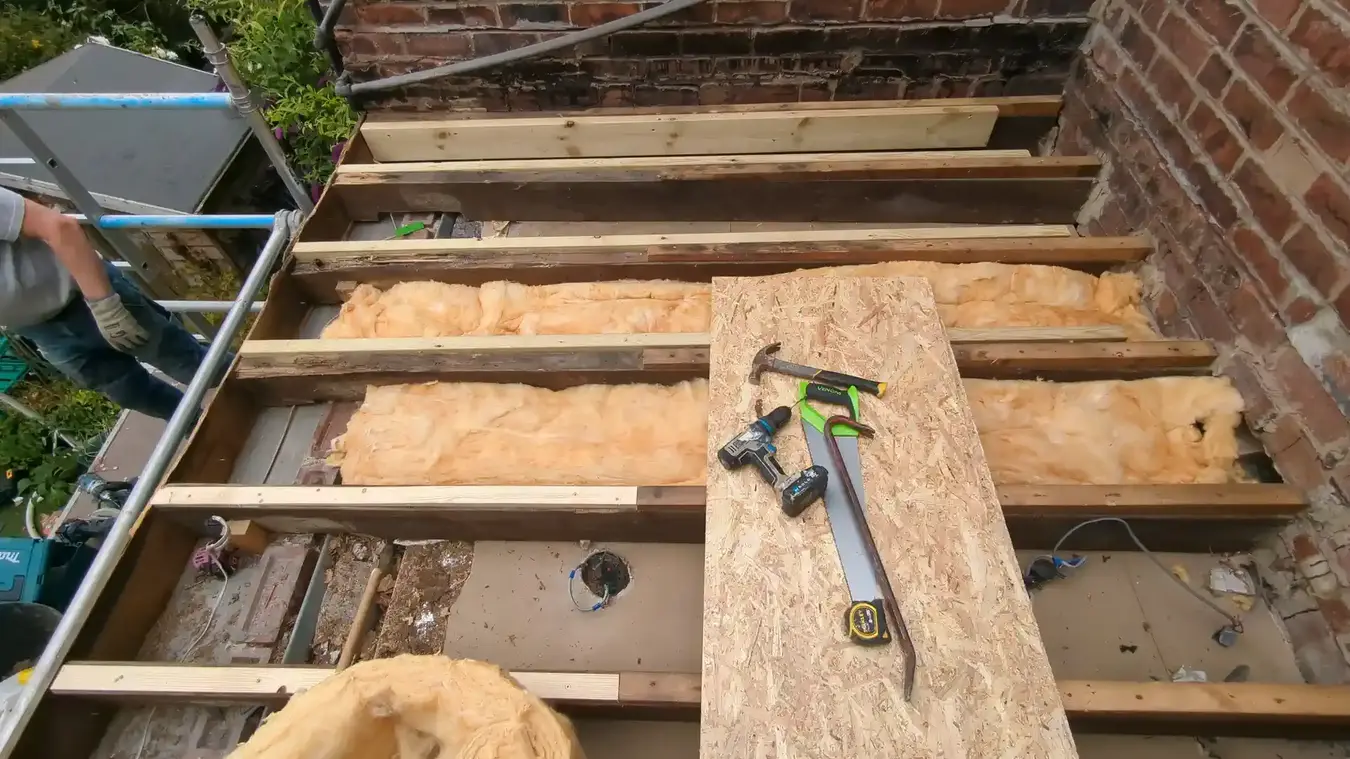
Fixing new timber alongside the old like this — sistering, or partnering — is a recognised repair. Because each new 6×2 runs the full length and sits on solid bearings at both ends, it carries the roof load in its own right. The old joist, decayed end and all, is no longer being relied on to hold the roof up. The new timber does that, and the two are tied together to work as one.
That’s the difference between a proper repair and a bodge. The load has been transferred onto sound, full-length timber sitting on real bearings — not asked to pass through a few screws across a short patch over a rotten section.
New firrings, insulation and a fresh deck
With the structure sound and treated, we replaced the rotten firrings so the roof had a proper, even fall to shed water — the thing the old roof had never really had.
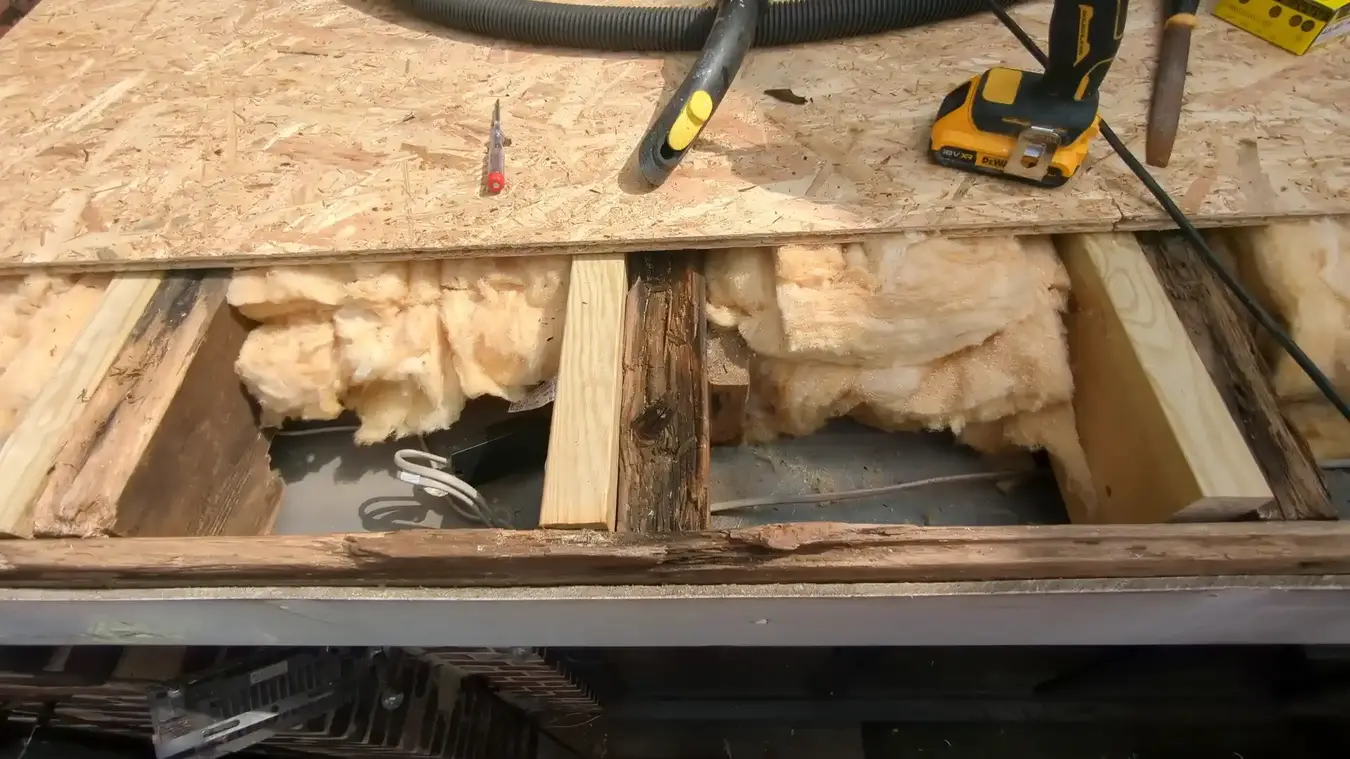
Then insulation between and over the joists, so the finished roof performs as it should rather than just keeping the weather out.
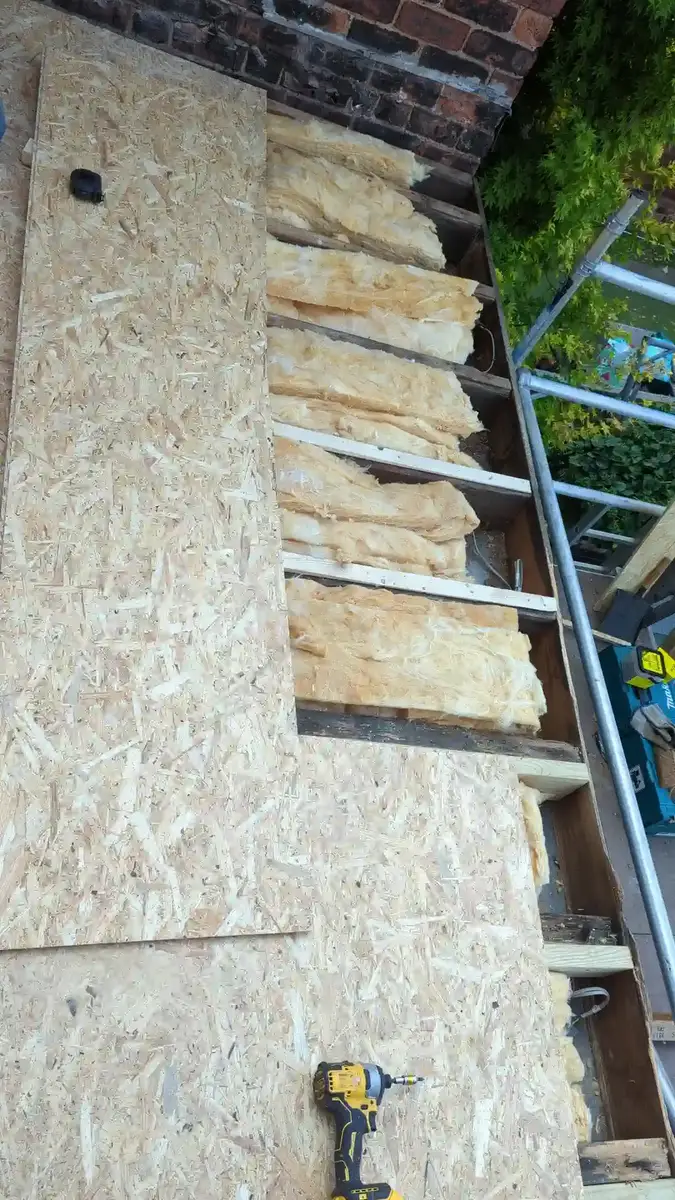
Then a fresh 18mm OSB deck, screwed down over the top. Along the front edge we fixed a batten to form the drip detail, back into the new full-length timbers — so the finished edge is carried on sound timber, not the old weathered end that had been left behind it.
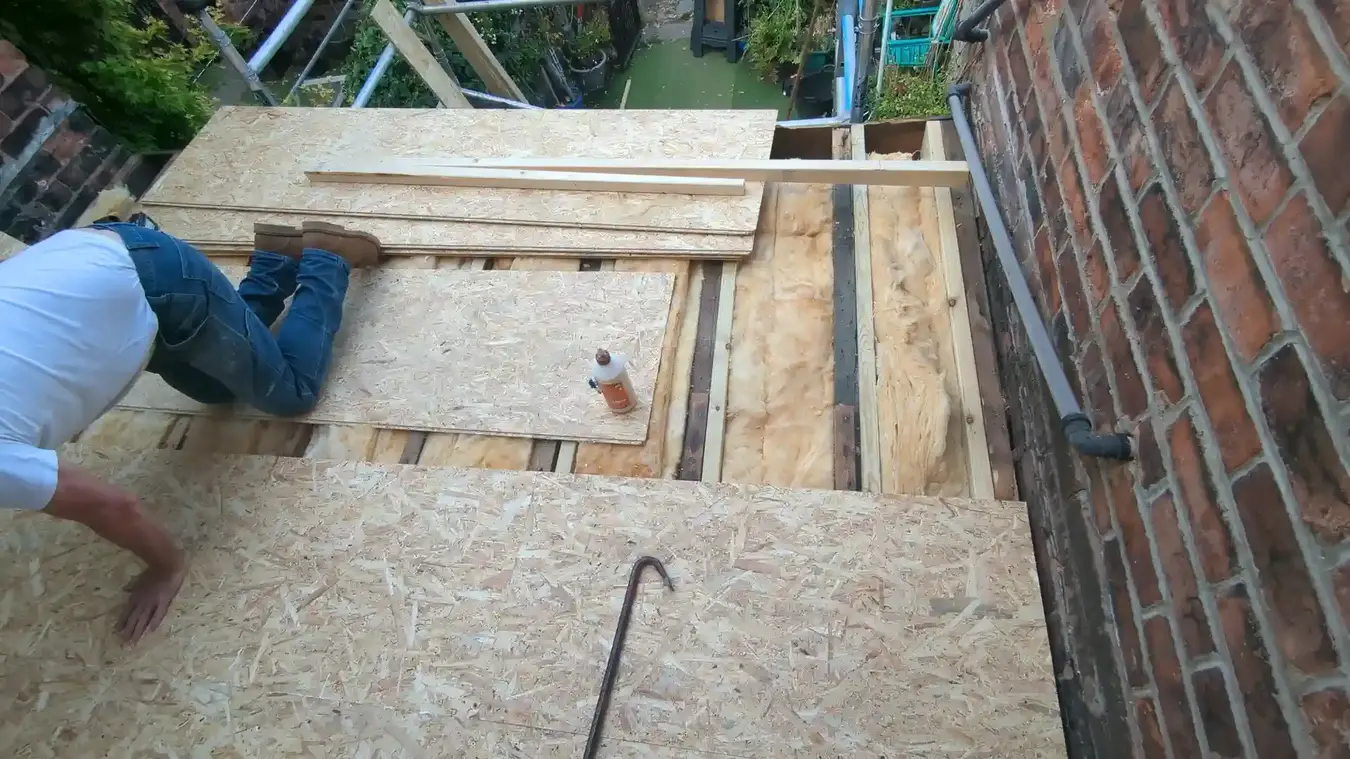
Decking like this isn’t just screwed down tight and forgotten. Timber boards move — they take up and give off moisture, and expand and contract with temperature — so you have to leave an expansion gap around them, in this case 20mm, giving the deck room to move without buckling. Skip that and the boards push against each other, lift at the joints and telegraph every ridge through the new covering. It’s a small detail that decides whether the finished roof stays flat.
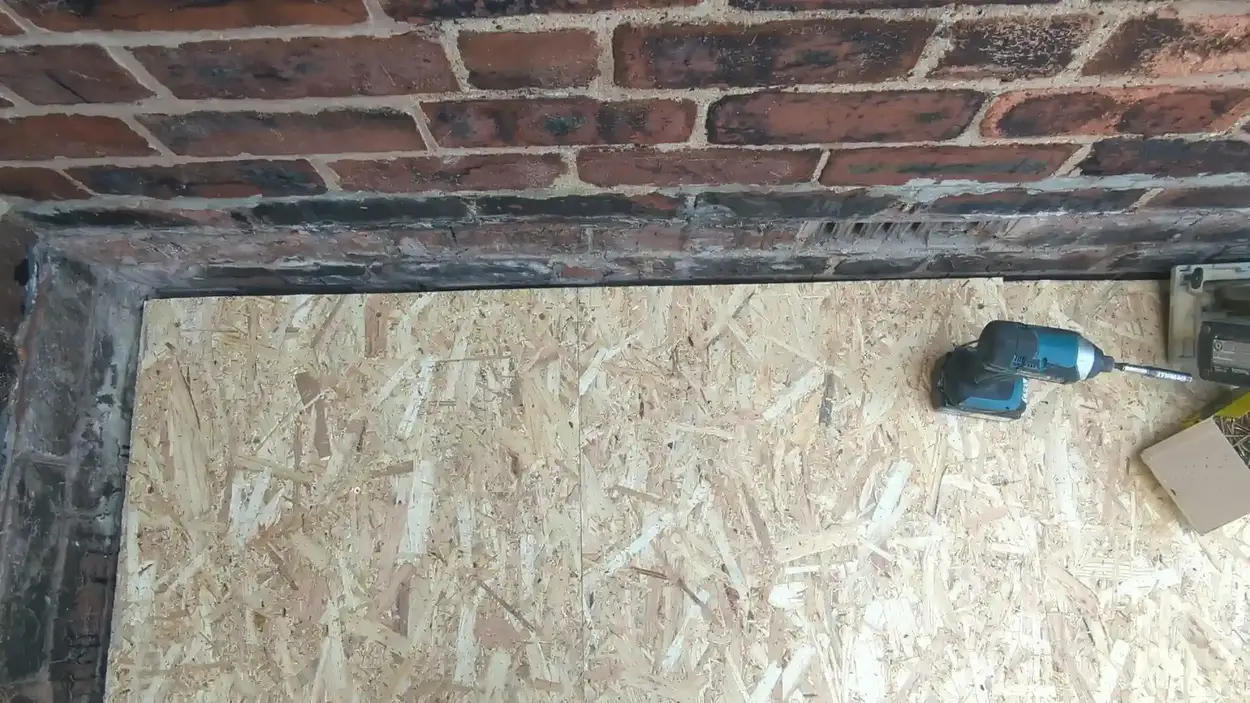
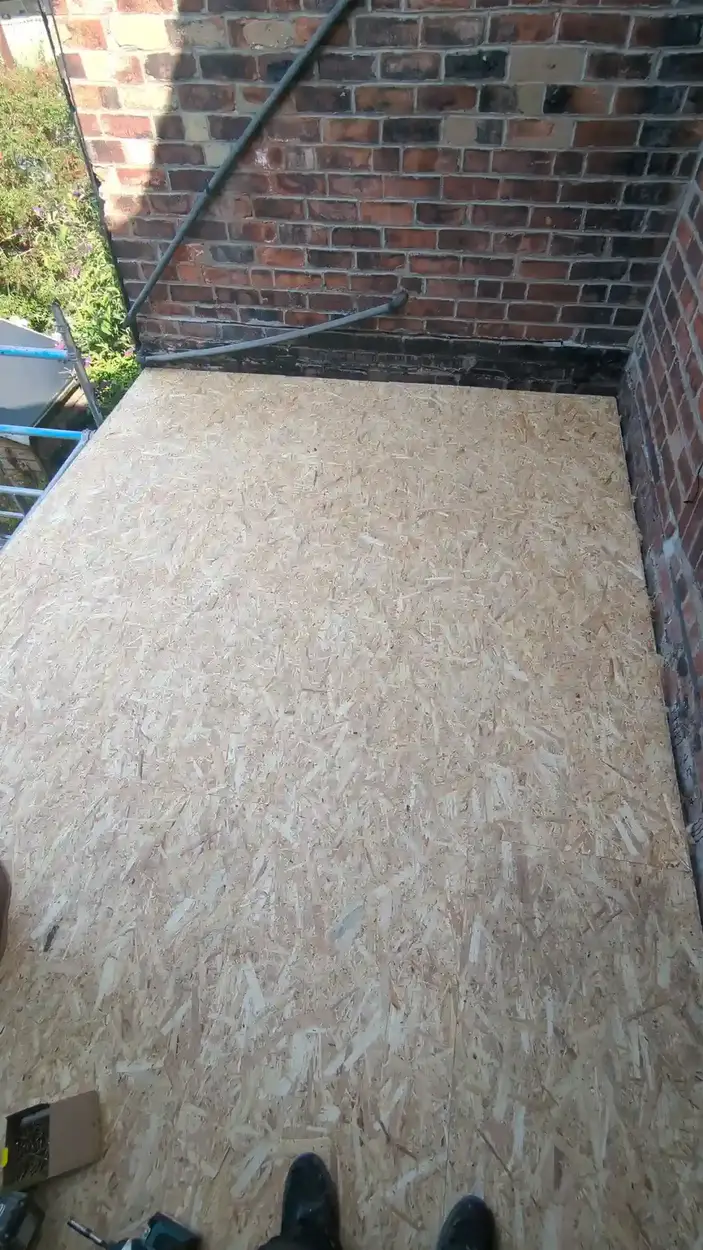
The deck was left clean, flat and solid, ready for its new waterproof covering — this time over a sound structure that can actually stay dry.
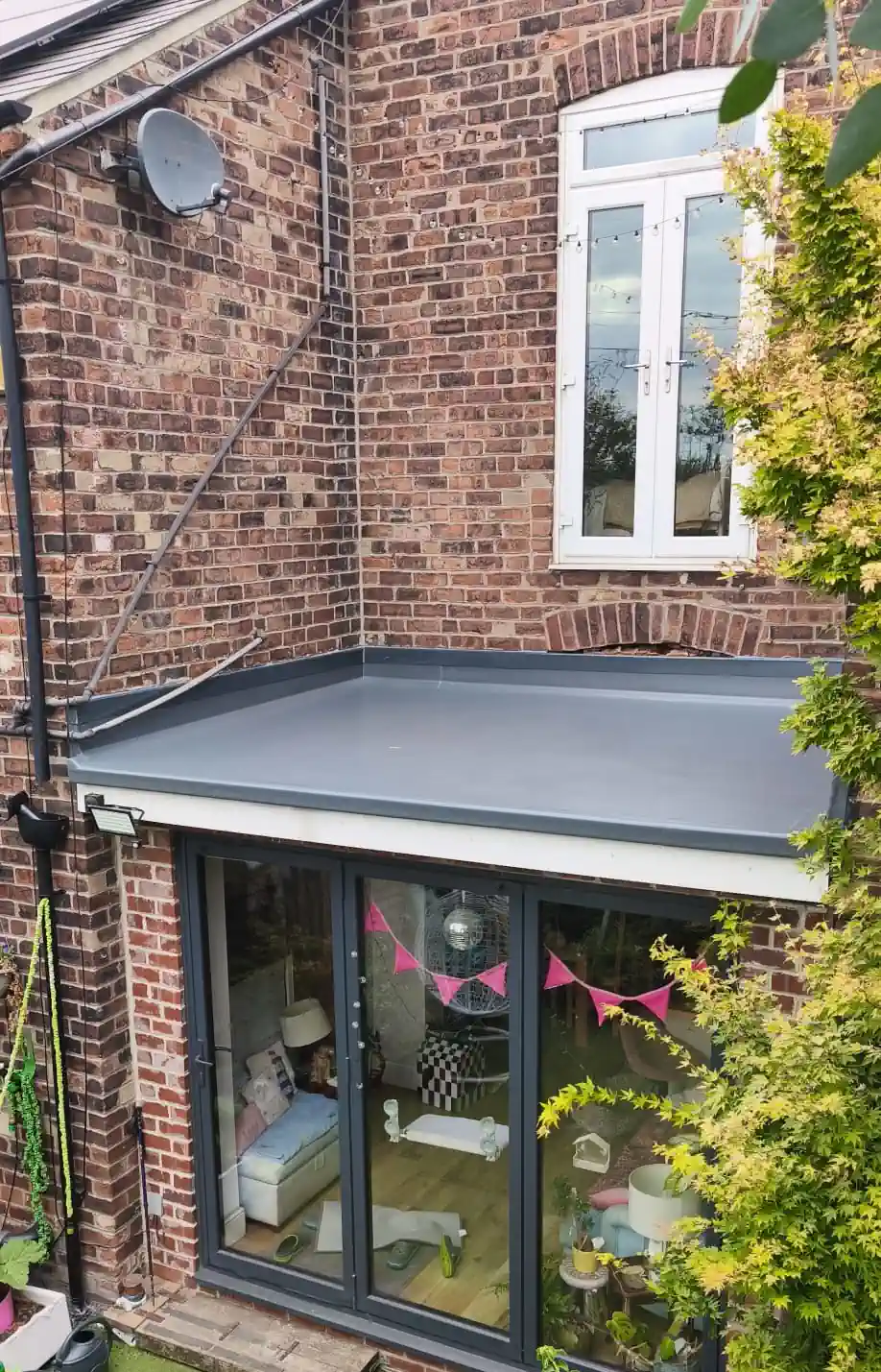
The GRP covering was laid afterwards by a roofing contractor, over the deck we’d built. That’s the part everyone sees — but a covering only lasts as long as the structure underneath it. Get the timber right and the roof has a chance; lay it over wet, rotten boards and you’re back where this job started.
Repair or replace a rotten flat roof?
People assume a rotten flat roof means tearing the whole thing off and starting from scratch. Sometimes it does. But often — as here — the sensible answer is to strip back to what’s sound, deal with the water, strengthen what needs it and rebuild the parts that have failed.
We didn’t need to remove every discoloured timber just because it looked rough. What matters is that nothing rotten is being relied on to carry load, and that the water is gone for good. That’s the same repair-or-replace judgement we bring to any timber repair or piece of roofing carpentry — keep what’s sound, replace what’s failed, and fix the cause rather than the symptom.
Flat roof repairs in Wakefield and across West Yorkshire
This flat roof was in Wakefield. Heritage Joiners takes on flat roof timber repairs, roof structure and joist repairs, firrings, decking and wet-rot repair across Wakefield, Pontefract, Castleford and the wider West Yorkshire area.
If you’ve got a flat roof that’s leaking, sagging or soft underfoot, send Rob some photos — the covering, the ceiling below, and any damp patches — and he’ll give you an honest first view on whether it’s a repair or a full re-roof.